The Impact of Emerging Technologies on Your Privacy
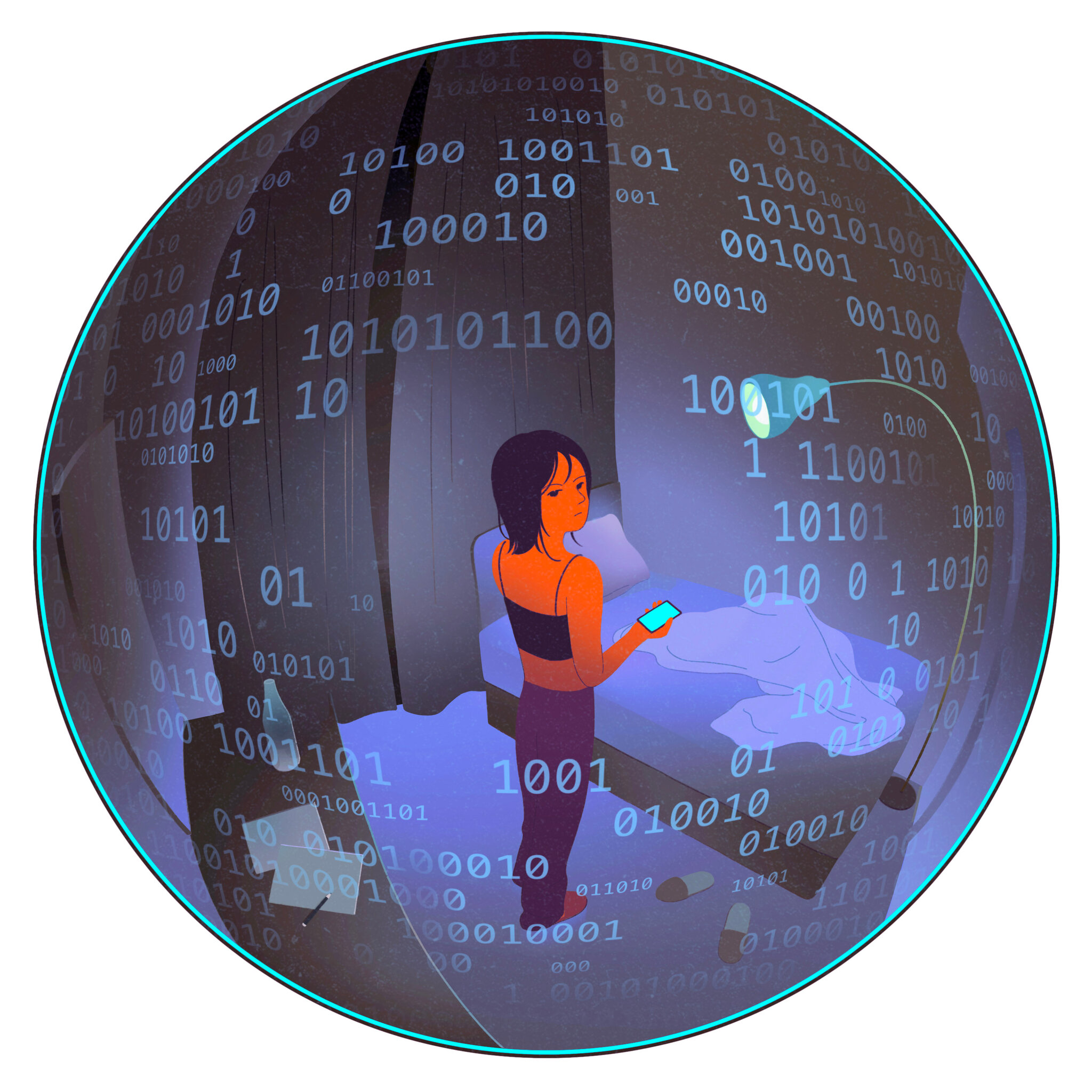
We live in a world where technology evolves faster than our understanding of its consequences. Artificial intelligence recommends what we watch, biometric systems unlock our phones, smart devices listen in our homes, and data flows invisibly across borders in milliseconds. While these innovations bring convenience and efficiency, they also raise a critical question: what happens to our privacy?
As a data privacy professional, I see a growing gap between technological capability and public awareness. This is where Privacy-Enhancing Technologies (PETs) come in not as abstract technical tools, but as practical safeguards for your digital rights.
Emerging Technologies: Convenience with a Cost
Here is the uncomfortable truth. Emerging technologies such as artificial intelligence, machine learning, Internet of Things (IoT), blockchain, cloud computing, and biometric identification are all built on one data. And most of the time, that data is personal. We are talking about your location, your health metrics, your voice recordings, your facial features, your purchasing habits, and your online behaviour.
Think about what this looks like in practice. AI systems require massive datasets to function, and those datasets may include sensitive personal information. Your smart home devices are continuously collecting audio, video, and behavioural data, whether you realise it or not. The wearable on your wrist and the health app on your phone track intimate details about your body and lifestyle. And biometric systems? They rely on identifiers you cannot change. Your fingerprint is not like a password you can reset.
While organisations may promise security and compliance, data breaches, misuse, surveillance, and unauthorised profiling remain real risks. Privacy is no longer just about secrecy. It is about control, fairness, and trust.
Why Traditional Privacy Measures Are No Longer Enough
Historically, privacy protection relied on methods like consent forms, anonymisation, access controls, and encryption. While these approaches still have their place, they are struggling to keep up with modern data ecosystems and here is why.
Consider anonymisation. With advanced analytics and large datasets, so-called “anonymous” data can often be re-identified. The tools available today make it increasingly easy to piece together what was once considered safely disconnected information. Similarly, consent loses its meaning when people are asked to agree to complex data practices they cannot realistically understand let alone avoid. How many of us actually read through a privacy policy before clicking “I agree”? Be honest.
Today, privacy must be engineered directly into technology, not bolted on as an afterthought. This is the core idea behind Privacy-Enhancing Technologies.
What Are Privacy-Enhancing Technologies (PETs)?
Privacy-Enhancing Technologies are tools and techniques designed to minimise personal data use, reduce exposure, and protect individuals while still enabling data-driven innovation.
Rather than asking “How do we protect data after collecting it?”, PETs ask a far more powerful question: “Do we even need to access the data in the first place?”
This shift in thinking is everything. Let me break down the key categories.
Differential Privacy adds mathematical noise to datasets so that insights can be extracted without revealing information about any individual. Governments and tech companies are already using this to analyse population trends safely.
Federated Learning allows AI models to be trained on data stored on local devices without ever moving the raw data to a central server. Your data stays with you. The model learns from it, but it never leaves your device.
Homomorphic Encryption enables computations on encrypted data without decrypting it. In other words, organisations can process your data without ever actually seeing the information itself.
Secure Multi-Party Computation (SMPC) allows multiple parties to jointly analyse data without revealing their individual inputs to each other. Think of it as collaborative analysis with built-in confidentiality.
Zero-Knowledge Proofs allow you to prove something is true, say, that you are over 18 without revealing the underlying data, such as your exact age or identity.
These technologies are not theoretical. They are already being deployed in finance, healthcare, government statistics, advertising, and cybersecurity.
How PETs Protect You in Everyday Life
PETs may sound technical, but their impact is deeply personal.
In healthcare, researchers can study diseases using patient data without ever exposing individual medical records. In finance, banks can detect fraud without sharing customers’ transaction histories with anyone. In smart cities, traffic and mobility patterns can be analysed without tracking specific individuals. And in digital identity, you can verify your credentials without handing over excessive personal information.
In sum, PETs help shift the balance from “collect everything” to “collect only what is necessary.” That is a fundamental change in how we approach data and it is one long overdue.
Looking Ahead
Emerging technologies will continue to reshape our lives. The real question is whether privacy will be sacrificed along the way or strengthened.
Privacy-Enhancing Technologies show us that a better path exists. By embedding privacy into the core of innovation, we can enjoy the benefits of advanced technology without surrendering our autonomy, dignity, or trust.
The future does not have to be surveillance-driven. With the right choices and the right technologies it can be privacy-respecting by design.

Recent Posts
OADC backs NDPC to promote data privacy

Privacy watchdog, labour inspectorate inspect Amazon centres